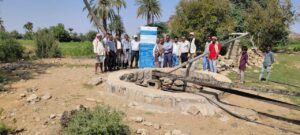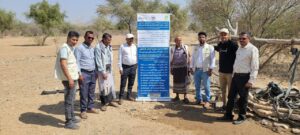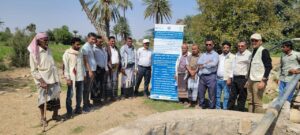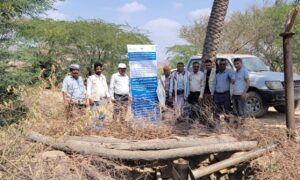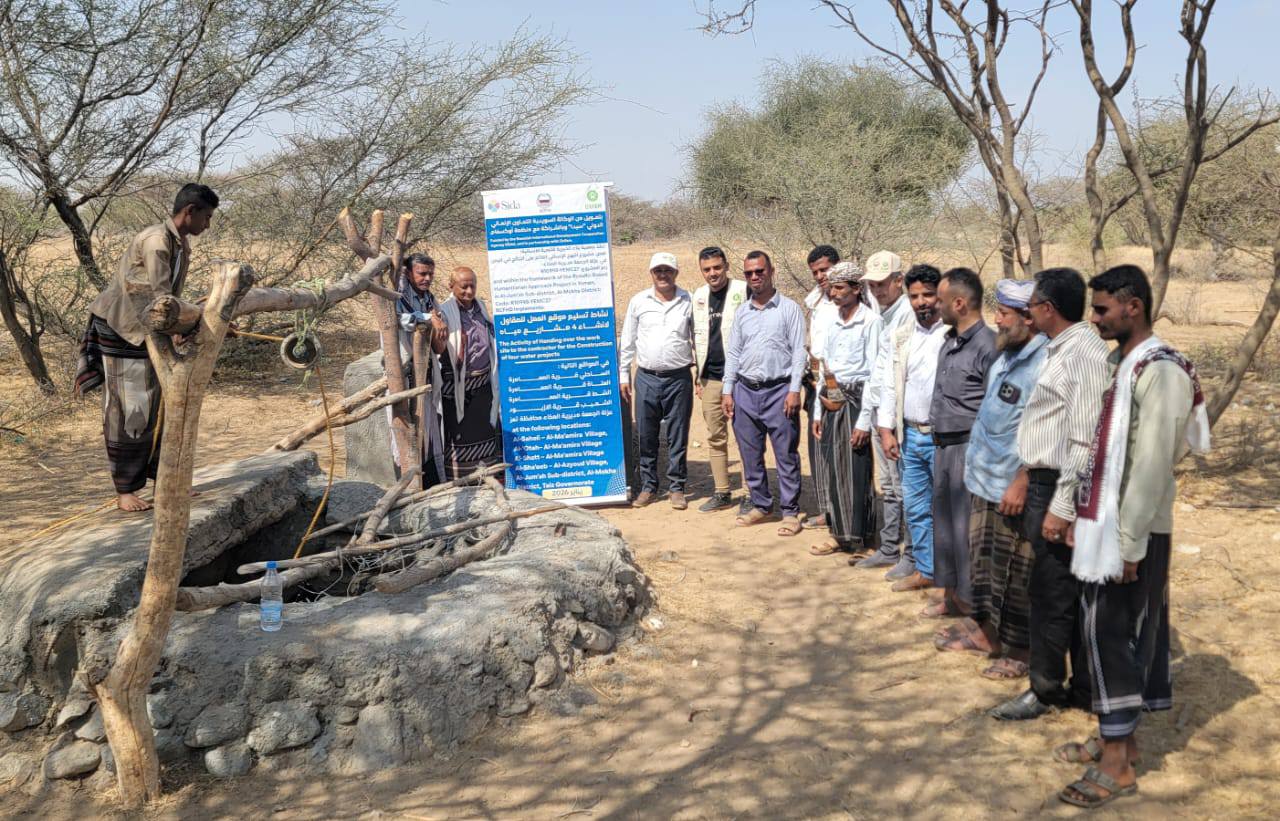


Bena Charity for Human Development (BCFHD) has officially handed over work sites to the implementing contractors, marking the commencement of rehabilitation works for four water projects, in addition to the construction of 210 sustainable family latrines, in Al-Jum‘ah Sub-district, Al-Mokha District, Taiz Governorate.
The water projects are located in Al-Ma‘amrah Village in the areas of Al-Shatt, Al-Saheli, and Al-‘Utah, as well as in Al-Azyoud Village in Al-Shaib area. Meanwhile, the construction of sustainable family latrines will be carried out in Al-Ma‘amrah Village – Al-Saheli area, and in Al-Azyoud Village in the areas of Al-Shaib and Al-Hadaqah.
The handover process was conducted in the presence of local authority representatives, including Mr. Abdulqawi Saad, Director of the Rural Water Authority Branch in Al-Mokha District, and Eng. Issa Jumaish, Engineer of the Local Council in the district, in addition to Mr. Tawfiq Abdulkhabeer, Secretary General of Bena Charity, Eng. Ayman Al-Absi, Project Coordinator, and the WASH Officers, Eng. Osama Al-Makhlafi and Eng. Ahmed Al-Kahlani.
This activity is implemented as part of the Results-Based Humanitarian Approach Project in Yemen, carried out in partnership with Oxfam and funded by the Swedish International Development Cooperation Agency (Sida), within the framework of the Water, Sanitation and Hygiene (WASH) component.
The water project interventions include well rehabilitation through deepening and protection works, installation of solar-powered pumping systems, construction of ten water distribution points, and the supply and installation of water network pipelines of various diameters with a total length of 3,360 meters. The sanitation component also includes the construction of 210 sustainable family latrines made of concrete blocks, targeting internally displaced persons (IDPs) and host community members.
It is expected that approximately 3,990 individuals from host communities, marginalized groups, and internally displaced persons will benefit from these interventions, contributing to improved access to adequate, dignified, inclusive, gender-sensitive, and safe water and sanitation services. This will help prevent public health risks and reduce morbidity and mortality rates associated with water- and sanitation-related diseases.
This intervention reflects Bena Charity’s commitment, in collaboration with relevant partners and stakeholders, to supporting affected communities and strengthening essential services amid the current humanitarian challenges.