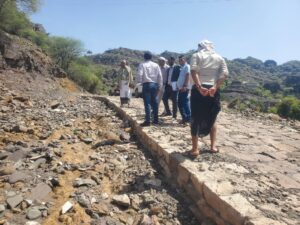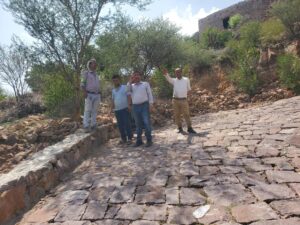


BCFHD, in partnership with Oxfam and with funding from the Government of Canada, officially handed over a package of sustainable development projects implemented under the Collective Cash Transfer Groups Program in Maqbanah District, Taiz Governorate. The handover took place during an inauguration and project delivery ceremony attended by local authorities and relevant stakeholders.
During the ceremony, the Director General of Maqbanah District, Dr. Hamid Al-Khulidi, received the completed projects and praised their significance in strengthening essential services and improving living conditions in the targeted communities. He emphasized that such interventions contribute to addressing community needs and advancing sustainable development efforts across the district.
Dr. Al-Khulidi also commended the role of Oxfam and Bunyan in supporting local communities through impactful development initiatives, while simultaneously building the capacities of local associations and community-based groups and enhancing their administrative and organizational skills to ensure the sustainability of development outcomes.
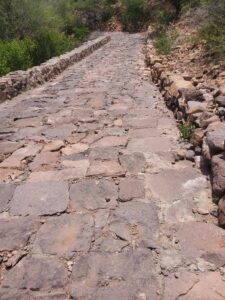
The projects handed over under preliminary acceptance included four road paving initiatives in several targeted areas: Al-Hardhah Road in Al-Afirah, Al-Mihal Road and Khadhfan Road in Humair Al-Jabal, as well as Wadi Muthib Road. These projects are expected to facilitate mobility and improve access to essential services for local residents.
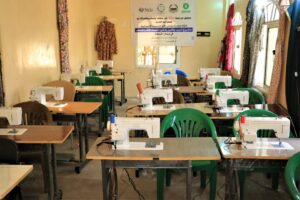
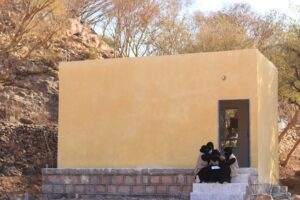
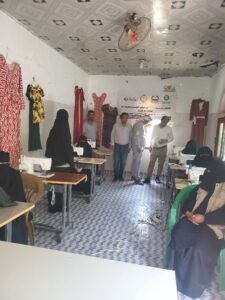
The program also incorporated a range of community empowerment initiatives, including the establishment of a women’s literacy classroom in Al-Yaman Isolation, the equipping of a sewing workshop in Al-Fakikah, and the delivery of specialized vocational training programs for girls and women. Graduates were further provided with sewing machines and production tools to help them establish sustainable sources of income and improve their livelihoods.
In the community health sector, several rural women received training in first aid and reproductive health and were supplied with comprehensive medical kits to support the provision of primary healthcare services within villages and remote communities.
The ceremony also witnessed the final acceptance of several completed projects, including the construction of protective boundary walls for Al-Shaheed Al-Barakani Health Center and Al-Fakikah Health Center, enhancing the protection of health facilities and improving their working environment. Additional completed interventions included paving two road sections in Al-Kuwaihah Village, Al-Yaman Isolation, and extending the water network in Al-Hayaji Village, Al-Qahifah Isolation, contributing to improved access to safe drinking water and reducing the burden on local residents.
The program further supported the establishment of household gardens for beneficiary families, aiming to strengthen food security, encourage home-based agricultural production, and promote greater self-reliance among targeted households.
These projects represent a model of integrated and sustainable development interventions that combine infrastructure improvement with economic and social empowerment, contributing to community resilience, improved living conditions, and enhanced development opportunities across Maqbanah District.